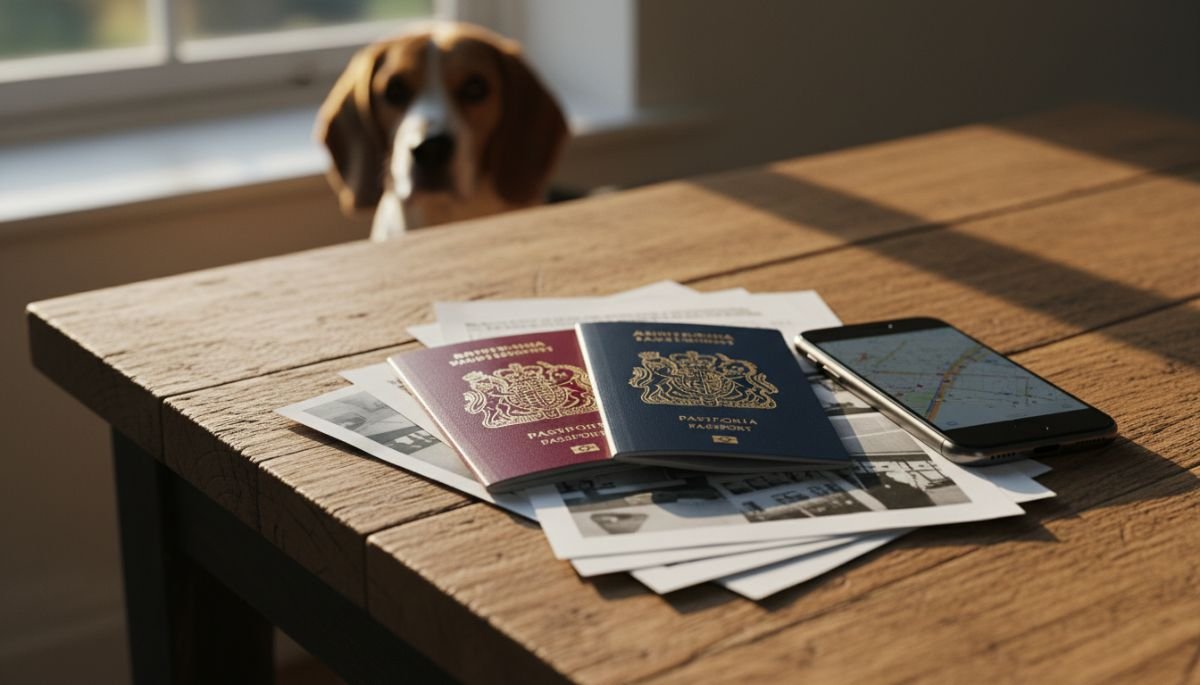
There is a specific kind of quiet dread that settles in when you realize your passport is nearing its expiration date. For those of us living the Kango Anywhere lifestyle (navigating life between the red dirt of Australia and the green hills of the UK) that little burgundy or blue book is more than just an ID. It is the key to our mobility, our family adventures, and our self-sovereignty. Recently, I sat down in our sun-drenched living room in Australia to tackle the renewal of my British passport, and while the digital age has brought some welcome conveniences, it has also brought some truly baffling bureaucratic requirements.
The Digital Sweet Spot: The Smartphone Photo
Let’s start with the win. If you have ever spent twenty minutes in a humid shopping centre photo booth trying to get a toddler to look at a lens, or trying to stop a beagle from barking at the curtain, you will appreciate the new system. The UK government now allows you to take your passport photo with a digital camera or a smartphone. This is a massive leap forward in practicality.
It is straightforward. You find a plain, light-coloured wall, ensure the lighting is even (no harsh shadows making you look like a tired extra from a detective show), and snap the photo. The online application portal even has a built-in tool that checks your photo in real-time. It tells you if it’s too dark, too blurry, or if your expression is a bit too ‘adventurous’ for their liking. It is the kind of engineering mindset I appreciate: a system that prevents errors before you hit submit. You can start your application and find the full requirements on the official GOV.UK passport page.
The Bureaucratic Shock: The ‘Other Passport’ Rule
However, the convenience of the photo was quickly overshadowed by a requirement that caught me off guard. If you are a dual citizen, or hold passports from other countries, the HM Passport Office (HMPO) wants to see them. And not just a quick glance at the bio-data page.
The instructions are clear: you must send any current or expired passports from other countries that haven’t been cancelled. You have two choices. You can either send the physical passport (which is a terrifying prospect when you rely on it for your daily life in Australia) or you can send a colour photocopy of every single page. Yes, you read that correctly. Every. Single. Page. This includes every visa, every entry stamp, and every blank page in the book. If you have a frequent traveller passport with 54 pages, you are looking at a lot of time spent at the scanner.
As someone who values personal agency and transparency, this feels like an overhanded data grab. Why does the UK government need to see a blank page in my Australian passport? The logic, presumably, is to ensure your identity is consistent across all jurisdictions and that you aren’t holding any conflicting citizenships or visas that might complicate your British status. For the nomadic family, this is just another layer of friction we must navigate to maintain our freedom of movement.
What You Need to Send
To ensure your application doesn’t get stuck in a Hemel Hempstead purgatory, here is the checklist of what you need to provide:
- Your old UK passport (the physical book must be sent back).
- The physical book or a full colour photocopy of every page of any other uncancelled passports.
- Additional documents if you are changing your name, gender, or nationality status.
The physical old passport will be returned to you, but it will be sent separately from your new one for security reasons. This is standard practice for international logistics, much like how we handle Sniffy the beagle’s export papers across borders.
Counting the Cost: Fees and Logistics
Independence isn’t free, and neither is a British passport. When applying from Australia, you are looking at two primary costs. First is the passport itself. A standard 34-page passport costs £108. If you are a frequent flyer and expect to be filling pages with stamps from the Rockies to the Alps, you might opt for the 54-page version at £121.
Then comes the courier fee. Because you are an overseas resident, the HMPO charges a flat £19.86 to securely send your documents back to you in Australia. In total, a standard renewal will set you back £127.86. It is important to note that they do not accept some prepaid cards, so ensure you have a standard credit or debit card ready for the transaction.
Shipping Your Life Overseas
Once you have paid the fee and printed your document checklist, you have to mail the physical old passport and those mountain of photocopies to the UK. The address is:
HM Passport Office
INT-DAP, PEX 541 989 376X
Three Cherry Trees Lane
Hemel Hempstead, HP2 7HQ
United Kingdom
Do not just stick this in a standard envelope with a few stamps. Use a strong, weather-resistant envelope. Consider the weight of all those photocopies. Most importantly, use a tracked and signed-for delivery service. You are essentially putting your identity in a paper bag and sending it 15,000 kilometres away. It pays to be careful.
The Wait: Timelines and Tracking
The current estimate for receiving your new passport is roughly 4 weeks. This clock starts from the moment the HMPO receives your physical documents in Hemel Hempstead, not the moment you hit submit online. If they need to interview you or ask for more information (which happens more often if your photocopies are blurry or incomplete) the timeline will stretch out.
Thankfully, the tracking system is quite robust. You will receive an application reference (something like PEX 123 456 789X) which you can use to monitor the progress at the HMPO tracking portal. There is a certain satisfaction in seeing the status change from ‘Documents received’ to ‘Passport printed’. It’s the digital equivalent of a ranger giving you the thumbs up at a park entrance.
Self-Sovereignty in a Regulated World
The process of renewing a passport from abroad is a perfect example of why we advocate for lifestyle design and planning. Bureaucracy is a friction point. It is designed to be rigid, slow, and sometimes slightly absurd (like the ‘every page’ photocopy rule). However, if you understand the rules, you can navigate them without letting them stop your journey.
Whether you are moving a beagle across the world, managing a FIRE-based budget, or just trying to keep your travel documents valid while living in a different hemisphere, the approach remains the same: gather the facts, follow the steps, and maintain your sense of humour. Even if that humour is slightly cynical when you are standing at the copier for the fortieth time.
The goal is always freedom. The freedom to take your family and your pets wherever you choose. A valid passport is the most basic tool in that kit. Get the application done, send the documents, and then get back to planning the next adventure. We have more of the world to see, and Sniffy has more sea otters to inspect.